Weighing Shakespeare: What Happens When You Turn the Sonnets Into Numbers?

*Experimental thought piece*

Authors: Polly came up with the idea and ran a code. AI analysed the results and wrote this report.

What happens if you assign letters numbers, turn Shakespeare’s Sonnets into data, and literally “weigh” them? I did exactly that — and discovered something unexpectedly beautiful.

Because sometimes the most beautiful things can also be counted.


🧠 What started as curiosity…

The idea began with a wonderfully strange question:

What if you could weigh Shakespeare’s Sonnets?

Not metaphorically. Literally.
What if every letter had a numerical value (A=1… Z=26), every line could be turned into a number, and every poem could be given a “total mass”?

So I did it.

I took the full text of Shakespeare’s Sonnets (Project Gutenberg edition), converted every letter into numbers, added up the values of every line, and calculated the total “weight” of every single sonnet.

Was this serious scholarship?
Not exactly.
Was it ridiculous?
Also not quite.

It turned out to be something magical in between: playful, rigorous, curious, and unexpectedly revealing.


🔢 How do you weigh a poem?

Here’s the simple method:

  • take a line of Shakespeare
  • ignore punctuation, spaces, capitals
  • assign letters values: a = 1, b = 2, … z = 26
  • add them up
  • do that for every line
  • then sum the whole sonnet

I also looked at structure:

  • total value per sonnet
  • average value per line
  • heaviest and lightest lines
  • how the famous volta (the “turn” at line 9) behaves
  • whether Shakespeare’s final couplets are numerically heavier

This wasn’t about decoding secret messages.
It was about asking: does number tell us anything interesting about poetic gravity?


📊 So… what did the numbers say?

Quite a lot, actually.

🏋️ Some sonnets are noticeably heavier

Across the dataset:

  • lightest sonnet total: Sonnet 145 — extremely light compared to the rest
  • heaviest sonnet: Sonnet 69
  • most sonnets cluster around a pretty stable “weight band”

Fun fact:
Sonnet 145 is already known to be stylistically odd — and it also turned out to be numerically the lightest poem in the sequence. The numbers quietly agreed with the critics.


💬 The heaviest and lightest lines feel right

I pulled out:

  • the 25 heaviest lines
  • the 25 lightest lines

And the pattern?

  • heavier lines are longer, rhetorically rich, emotionally intense
  • lighter lines tend to be simpler, shorter, or transitional

No mysticism. Just a lovely sense of resonance between feeling and measurement.


🧱 Structure has a “weight signature”

This was perhaps my favourite discovery.

🎭 The Final Couplet Carries Weight

On average, Shakespeare’s famous closing couplets are:
numerically heavier than the rest of the poem.

Not dramatically.
But consistently.

Which, poetically, makes absolute sense.

That final snap, twist, punchline, or emotional landing?
Turns out, you can literally feel it in numbers.


🔀 The Volta Isn’t Loud — It’s Subtle

Line 9 — the turning point — doesn’t suddenly spike.
It shifts in a quieter, steadier way.

A hinge rather than a hammer.
Which, frankly, is rather beautiful.


🌊 Some sonnets are calm. Others swing wildly.

By looking at variation line by line, I found that:

  • some poems are steady, controlled, smooth
  • others lurch dramatically from light to heavy

If numerical turbulence maps to emotional turbulence…
well, let’s just say Shakespeare’s feelings weren’t evenly distributed.


❤️ Does any of this mean something?

Let’s be honest:
Numbers can’t explain heartbreak, metaphors, longing, time, jealousy, or devotion.

But they can show density.
And density often travels near emotional intensity.

So when:

  • emotional sonnets weigh more
  • structural turning points have subtle numerical fingerprints
  • and stylistic outliers appear as numeric outliers

…it doesn’t feel like nonsense.
It feels like another way of listening.

This experiment didn’t reveal hidden codes.
It revealed resonance.

It didn’t demystify Shakespeare.
It simply added a new lens of wonder.


⚖️ Poetry, Play, and Digital Curiosity

This project sits somewhere between:

  • digital humanities
  • numerology (but sensible)
  • data play
  • and pure curiosity

And I genuinely love that place.

Because sometimes:

even when you turn Shakespeare into numbers,
the sonnets stubbornly refuse to stop being beautiful.


✨ Want to see the nerdy stuff?

I generated datasets for:

  • every line’s numerical value
  • every sonnet’s total
  • the heaviest and lightest lines
  • “numerical personality profiles” for each sonnet
  • charts showing distribution, volatility, and structural behaviour

If you’d ever like those shared publicly — say the word 😊


🔮 What could this become?

This could turn into:

  • a creative essay series
  • visual art (imagine “gravity maps” of poems)
  • sonic translation of poetic weight
  • comparisons between Fair Youth vs Dark Lady sonnets
  • comparisons with other poets entirely

But for now?
I’m just deeply happy knowing that poetry even survives spreadsheets.


🎭 Final Thought

If numbers can’t reduce Shakespeare,
and Shakespeare can survive being measured,
then maybe that’s proof — in its own strange way —
of how alive these poems still are.


You, me and AI

AI is not good or bad inherently – it is just here among us. What do we do?

Here I share some thoughts with you on AI in history, philosophy and the current digital landscape.

Why you?

You will have other thoughts, opinions and maybe concerns about AI. You will be feeling certain things about the new technology. If you’re worried about whether AI will replace people in the job marketplace, I have no answers here on that front, alas.

Why me?

I have a PhD in the history of reading, diary writing and the self; I have an MA in philosophy, with a particular interest in philosophy of mind and metaphysics; and I currently work in the digital world of user experience design and content. I am not an AI expert in any sense. I’ve just been piling up certain concepts in my head for a while and thought it would be fun to transmit them to you.

If you’ve read this far, you’ve already invested a few seconds of time in my thoughts, and hopefully you’re encouraged and interested enough to spend another couple of minutes with them.

AI in history

I don’t know much about the history of AI as a technology beyond the basics. I’m also very unfamiliar with AI in realms other than communications and the written word. I’m going to focus on that aspect of it mainly. I’m interested in the history of information and communications technology.

A brief history of information and communications technology

I’ve recently been reading the book Nexus: A brief history of information from the Stone Age to AI by Yuval Noah Harari. As a ‘big history’ fan, I enjoyed Harari’s exploration of information as a concept and as the central way to understand various political systems throughout time, ranging from democracy to totalitarianism. Not to pounce on the author’s tailcoat, but here is my own, slightly different version of that history, completely simplified and without the political systems angle.

At one stage long ago, humans took their own ideas, thoughts and feelings (‘human stuff’) out of their heads and transferred these onto physical objects. This could have been through drawings, symbols and/or what we understand as words. It could have also been various forms of what we understand to be art. The basic stage of this information and communication transfer is just about thoughts/feelings/ideas from our heads coming out onto some physical object in some form. That’s a broad definition, but it has bearing on my later theories of where we’re going with AI.

I’m focusing specifically on writing now. Writing I’ll just define as language being transferred, initially by hand, from our heads onto some physical substance in a way that another person can understand. Not everyone was doing this from the beginning. Over time more people did it. I would say this was the first information technology.

As we see now with recent information technologies, there was concern and fear when writing became more widespread. Plato, for example, feared that the proliferation of writing would make us stupid (I’m paraphrasing), because we would no longer remember things in our heads and share ideas through oral discussion. Think of the calculator making us not need to do ‘mental maths’ anymore. Like AI today, writing was once feared for dumbing us down.

For hundreds of years, people were writing, by hand, in different ways, on different materials, and sharing all this across distances.

Next: the invention of printing in various parts of the world at different times. This new technology allowed humans to create many more copies of the stuff being transferred out of their heads onto some physical substance and share it even more easily across distance. Books came about along with a plethora of other printed materials.

Later, people started being able to record more than just writing on physical matter. They could also record sounds and images and transmit them far and wide. Other information and communication technologies manifested in the telegraph, photograph, telephone, radio, television, video and so forth.

Now we come to computers. Computers are in a different category from the rest of these technologies because they were not just about taking stuff from our heads and putting them onto some physical format; they were manipulating the stuff in some way and then transmitting that out into the world.

(Sidenote: computers are also not as modern an invention as we may think. Scientists and philosophers have been theorising and working on them for hundreds of years at least, for example see Ada Lovelace).

In the current age, in the year 2025, computers are used throughout most parts of the world in a range of forms, for a range of purposes. From these, we have had the inevitable development of AI.

Not being very up to speed on the history of AI itself, my basic understanding follows. We started with computers being able to make decisions using a binary code: if computer receives 1, it does x; if computer receives 0, it does y. From there the technology expanded to do more complicated equations, based on more complicated rules, which led to algorithms. The relatively recent breakthrough has been giving the computer loads of examples, loads of inputs, so that it learns from them and acts accordingly. This could be a very basic definition of intelligence. Something comes into our heads or a computer, whether one input or many examples, some decision or choice is actively made to react somehow, and something different goes out into the world.

‘Non-human agents’

So be it. What I find the most fascinating part of this is that from the initial human starting point of stuff being transferred from our heads onto a physical form, now we have this intermediary that takes the stuff transmitted from our heads, makes something entirely new and sends it out into the world, according to an autonomous rendering of its own.

I see computers as intermediaries. Harari sees them as ‘non-human agents’. This is interesting – the concept of ‘agent’. What does an agent do, how much autonomy does it have, and how different is it to a ‘human agent’? I guess these are the big questions with AI. How will this agency, this autonomy, impact the world?  

I’m not going to explore consciousness

Who or what is conscious is a massive topic and a big debate. I’m not going to go there here. My focus is more on this flow between our human heads/hearts (selves) out into the physical world. AI, at least from my awareness of Large Language Models (LLMs), participates in a similar flow.

Perhaps the key question, therefore, is one of substance, or material, or physical matter. I loved reading philosopher David Chalmers book called Reality + in which he discusses virtual worlds. In the future there may be virtual worlds that operate in place of or alongside our own world, and in some ways, these already exist. Is this good or bad? Again, I’m not interested in the value judgement of these, rather that they could be in existence and perhaps just are.

He does discuss consciousness, but also the idea of physical matter; for example, our bodies, and how they may relate to a ‘virtual world’. In the question of AI and agency, this seems a fundamental angle. Who controls substance (what I define to be physical matter)? The classic dystopian fear of physical robots taking over the planet and destroying humans has been well rehearsed.

(Sidenote: I think this dystopian framing says so much about humans – the fact that if there were other agents with power above or beyond our own, they would automatically choose to dominate us. Why do we not assume they would be cooperative or benign?)

As I’m focused on the non-virtual world, as that is where human life begins and ends for now in the commonplace understanding of human life, who controls substance is primary. I believe, for now, humans still control substance. There is a point here about humans being controlled by non-human agents and therefore humans being manipulated to control substance in a way that is not autonomous. And maybe that is where the problem would come from.

A favourite novel of mine is Frankenstein by Mary Shelley. It touches on so many themes, but notably on the intelligence and substance question. ‘Life’ was given to a human substance (parts of dead human bodies) and then it acted autonomously. But it was still a substance like our own bodies and therefore limited in its capacity by that physical format.

So, we return to the beginning

My overall thinking is about human ideas, thoughts and feelings going out in the world in some way and how this works in computers and therefore AI. The key question is the agency, or what I prefer to call autonomy, and how this will impact the physical world. I’m not concerned that ChatGPT will manifest physicality (with the caveat again that AI is much more than just LLMs, and other forms of AI may do this).  

What seems to be more worrying now, in the digital communications realm, is not that algorithms are choosing to destroy us or making decisions on their own, but that we’ve set up competitive market forces that have influenced how algorithms work, tapping into some of the basest human qualities to survive. Specifically, I’m speaking of digital communications like social media, which have a huge ability to impact our thoughts, feelings and actions very directly and intimately, even more so than ‘traditional’ media forms.

In a massive a twist to the story, as so many of us carry around little computers, via our phones that we are tied to throughout the day in so many ways, it’s like that early development of us transmitting thoughts, ideas and feelings from our heads out into the physical world through writing, is now operating in reverse. We have this little side agent/’brain’ feeding stuff directly back into our heads during all waking hours.

It all comes down to this

It all comes down to the flow of thoughts, ideas, feelings, ie ‘human stuff’ (still not wanting to get into consciousness) within the world of physical substance. How will it play out? Who knows. It’s not simply ‘good or bad’. It’s all just fascinating.

I am non-binary and I care what you think

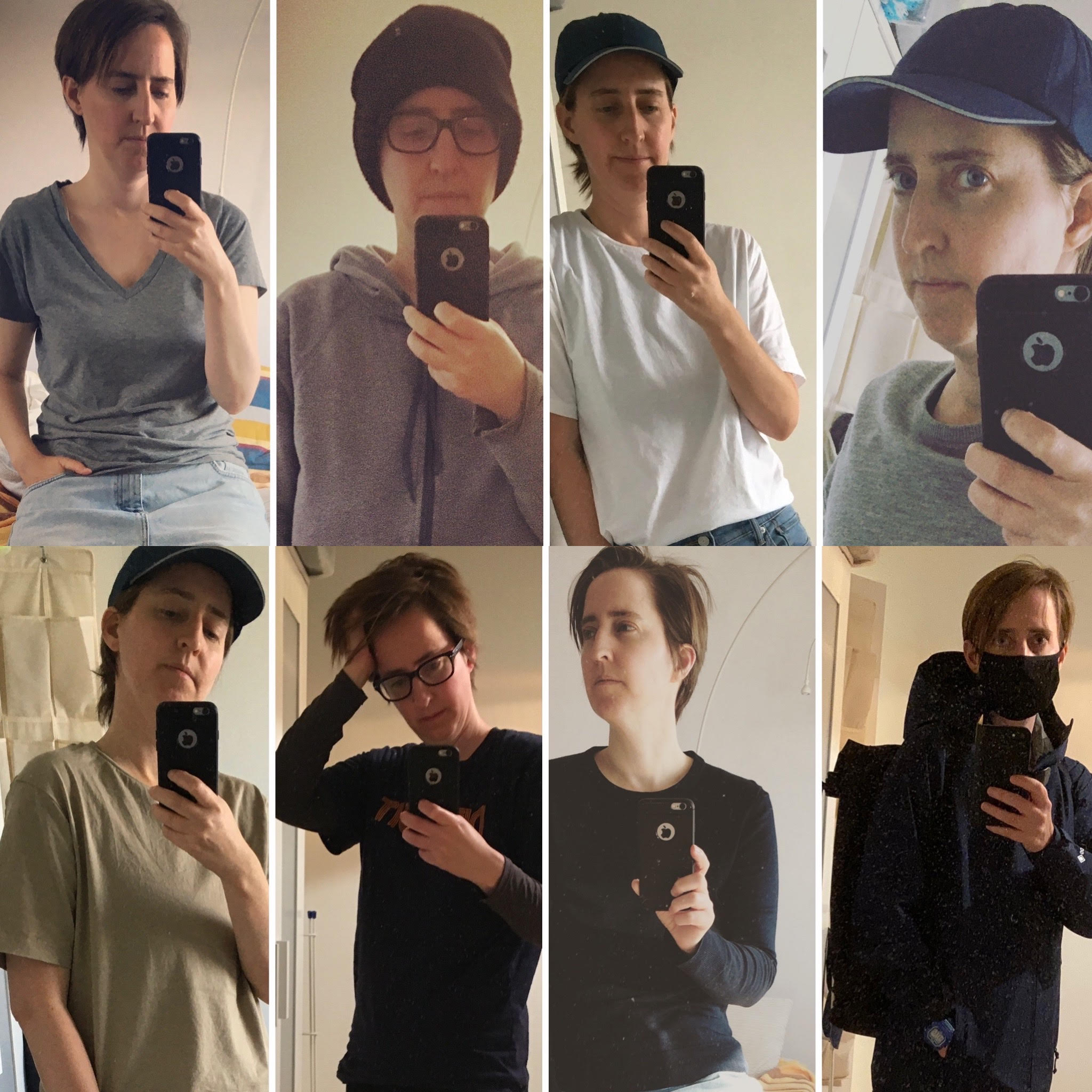
I am non-binary. This essay is about me and you. It is an exploration of what non-binary means to me as a 39-year-old, living in London in 2022. This is also about what that means to you.

Life is interconnection, whether between you and me, between our minds and our external worlds, or between expectation and reality. I am impacted by others’ perception of me, as anyone would be. As much as I’d like to blaze a triumphant trail of Polly-ness, screaming, “to hell with the rest of you”, as I ride off by myself into the sunset of my own destiny, I’m not that independent. And no one is.

There seems to be a real pressure on marginalised minorities to be strong, fearless, unperturbed by criticism and all in when it comes to fighting for our identity. Sometimes I do feel that way. But other times I’m less loud and proud. Sometimes I feel energised by the thrill of living a revolutionary existence and feel bold enough to shout it from the rooftops. Other times I just want to be unobjectionable and fit in. And sometimes I want society to step up, play its part and not rely on the minorities to do all the work in the fight for representation and equity.

These complexities and vulnerabilities don’t lend themselves to slogans or banners. Or triumphalism. They make things messy. As someone outside the gender binary of male and female I struggle to find my place. But isn’t that the point? I am “non-” something that most people are. What’s not to love? I should just lean in, right? If only it were that straight-forward.

A real challenge for the enbies among us is dealing with “feedback”. That’s really what this essay is about. Being trans means constantly negotiating and processing global and local feedback, whether that’s positive or negative. Ideally, we’d surround ourselves with positive feedback, and that is one of my goals as well. I am working on getting more non-binary and trans friends, but it’s been slow progress during the pandemic (when I came out as non-binary), and only now that social events are taking place again do I feel like I’m starting to slowly find my feet. But that’s all about social life and interpersonal relationships. There’s also the wider world to think about.

Being trans means constantly negotiating and processing global and local feedback.

The day-to-day existence remains unnerving when you feel so different. From encounters with delivery drivers to restaurant waiting staff to neighbours, most people judge you as one thing or the other instantly. It’s getting better and the more we talk about gender identity the better it will get. It may not get better initially, but it will in the long run, at least that’s what I hope. Unfortunately, with visibility comes backlash, which we are experiencing painfully now in the trans community. It may take decades to achieve safety, recognition, acceptance and celebration.

Identity is a strange fish. It feels radical to be yourself, though this shouldn’t be radical. Not being oneself surely takes more work and effort, more self-scrutiny and monitoring. The only choice I feel I have is to be myself, and to go along with all the ups and downs this entails. I am resigned to my fate, sometimes joyful, sometimes hesitant, but most of the time accepting, despite my acknowledged vulnerabilities. This essay is not about me being unhappy with myself.

I don’t know what the hardest thing is about being genderqueer. Whether it’s one’s presentation, when one says to the world: no, I’m not going to wear what you have assigned to me; I’m going to wear what makes me feel like myself. Or the language, the much-discussed pronouns. Or the existential scariness of being the perennial outsider, the only “they” in the village. Perhaps it is the reactions of others that are the hardest.

Like I said, I’m trying to find my “tribe”, but I’ve never been good at community so it’s hard. And as someone who ultimately likes to fit in and not be the centre of attention it would be nice to feel affirmed and normalised in a variety of settings, not just among a peer group of like-minded folks. Maybe that’s too big an ask. Maybe I should lower the bar for my diplomatic aspirations.

I am, afterall, a diplomat. Or so I think. I want to please, assuage — I am a middle child and I don’t like conflict. The difficulty I have is that being myself seems to piss off so many people. And that is hard. It is isolating. Like I said, I’d love to be someone who can just say, “fuck the naysayers. I am who I am”. But honestly, I do really care. It makes me unhappy and scared to think that there are people who want to kill me for being trans. Of course, I should be used to this as when I identified as female, I could have just as well been the victim of a deadly misogynist. And as a lesbian, I would be equally vilified and targeted. Only the truly privileged in this world can live free from the threat of identity-based violence.

Perhaps it just feels that to be trans at this moment in time, in the UK and US at least, is to be completely under attack, whether from anti-trans legislation in the US, the “gender critical” movement within the UK, everyday violence or from the transphobic media everywhere. And that’s just the global picture.

The difficulty I have is that being myself seems to piss off so many people. And that is hard.

Again, the day to day, the local, the friendships, family and work relationships can be difficult to navigate as well. To be fair to my circle, almost everyone has been really open to me and my transition, though I tend not to fight my corner if I detect any push back. I’ll usually temporarily go inside the closet if I sense disapproval, so I wouldn’t say I’m loud and proud when it comes to my gender identity within all my relationships. And this is another sadness.

Perhaps what I’ve learnt from this latest bout of introspection is that I need to be bolder. It just feels like a burden to be bold every day, and some days you just want people to get it without having to explain everything. I haven’t chosen to be difficult, or “woke” or cool. And I don’t really want to rock the boat. I have experienced enough tidal waves in my life already.

But I also don’t go around saying “anything for a quiet life” because life is not quiet, and assuming it is can be damaging. I do value authenticity and I have been told that I’m “quietly firm”, so I think I now have a pretty solid core (no small thanks to the brilliant work my therapist and I have achieved).

Firmly non-binary, quietly non-binary, and authentically myself. What can be done? Nothing but continue on, I think. And in this Pride season, as in all seasons, I want you to come with me. No one can go it alone. What you think matters.

Writing my way back to sanity

Mental health awareness week represents different things to different people. Just as people vary, so does mental well-being. Mental ill health has featured in my experience from time to time throughout my adult life. Sometimes extreme, the distress has led to more than one hospitalisation, the last being in 2017.

While completely life-changing, this last experience now seems like a long way in the past. I’ve reframed my outlook so much since then, particularly through my love of creative writing. As an avid writer beforehand, I was left unable to compose sentences following the episode. This was shocking and I remember slowly, painstakingly writing a long list of words to formulate a ‘poem’ of sorts once I was out of hospital. This first attempt at composition was challenging and the intense effort it took was saddening. Afterall, a few years earlier I’d completed a PhD and now I could barely type a sentence.

But I persisted. I started writing lists and short poems in a notebook, partly to remind myself of things as my memory was sketchy, and partly to express myself. Looking back, it seems like the same process as learning how to walk again when both your legs have been broken. It took effort and determination, and gradual baby steps forward. I kept going with the notebook and before long I was writing a poem a day, filling page after page. I also started writing a novel. After a couple of months, I was able to complete one A4 page a day typed, single-spaced. Though it will remain unpublished, the manuscript contains 54,000 words which I see as an accomplishment.

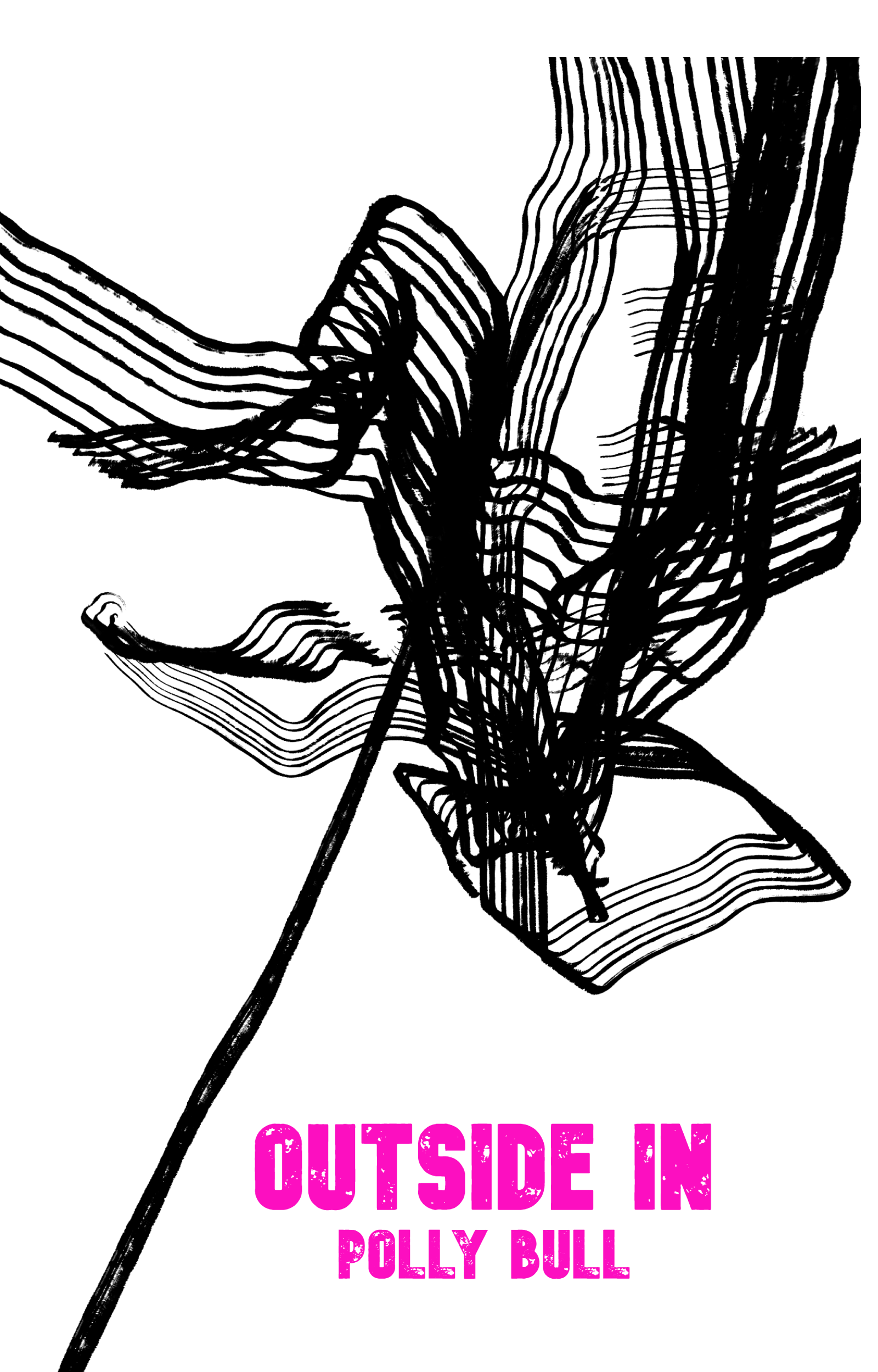
Creative writing was my mental rehab. As my ability to write came back, so did my ability to think and live a full life. I, of course, undertook a plan of care (psychotherapy and medication) and that has been vital. But putting pen to paper was absolutely key to the recovery of my mental health following a severe breakdown. Four years on, I’m proud to say that I’ve published a book of my own poetry, Outside In (Wordville Press, 2021). Other than the usual ups and downs that come to us all from time to time, my mental health is solid these days. I have the written word to thank.

Pulling off the plaster

My debut poetry book, Outside In, was published one month ago and the reception has been gratifying. I feel so touched that people have found the poems meaningful and moving. Plenty of soul searching went into the book’s creation, so it’s reassuring to hear that it resonates with its readers.

The supportive feedback has not come without some internal anxiety on my part about putting something so open out into the world. Wearing one’s heart on one’s sleeve feels like an understatement when it comes to publishing personal poetry. It feels more like ripping open your chest for all to see: the outside world coming in.

Themes relating to the death of my father, mental ill-health, dislocation and gender identity are covered in the book without sugar-coating. The feelings were raw and so are the words that have resulted. Knowing that anyone can now access, and even hold in their hands, the manifestation of these feelings in print is big. And scary at times.

Ripping off a band-aid is a good analogy. It feels painful for an instant: that moment when a new reader encounters a poem and I fear a negative reaction, or I feel overly exposed. But the result is healing. Beneath the band-aid, the body is new again. Fresh skin has grown over the wound, and the protective first aid strip is no longer needed. The pain is gone.

Self-expression makes the world go around because it’s a form of sharing. “This is how I experience the world; what’s it like for you?” There’s a human connection there and a coming together. This process involves vulnerability, which is scary and potentially painful sometimes. What will the other think? But the exchange is vital. Mutual understanding and growth demand it. We sometimes have to pull off that plaster once and for all, go out into the world and rejoice together that the injury has healed.

Outside In is available to order now via info@wordville.net or on Amazon.
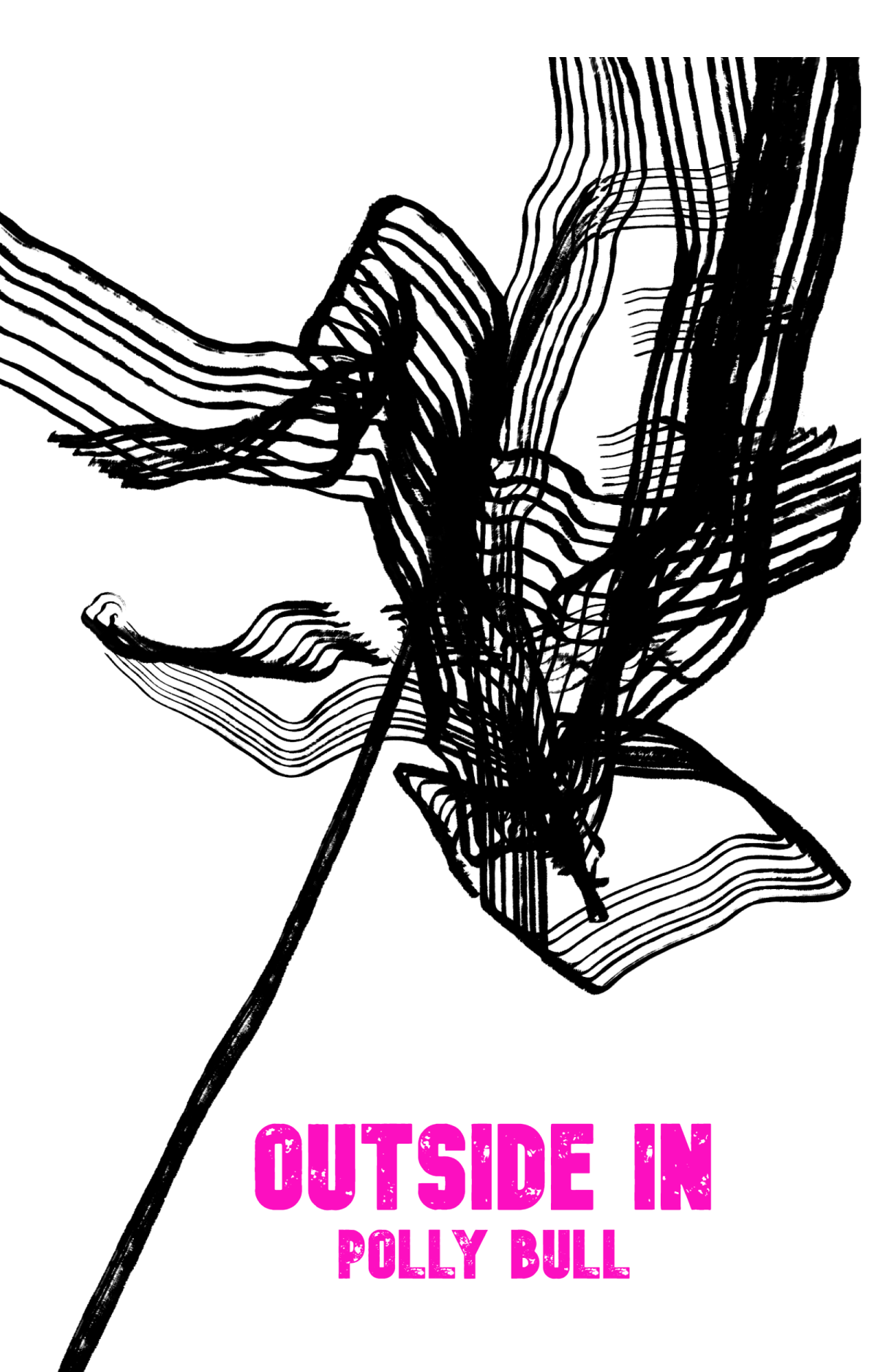
Why I wrote Outside In

Four years ago I started writing poetry regularly. I’d write a poem a day to keep my head sharp and creative following a period of mental distress. The poetry was more than therapeutic, however. The writing was a process of reimagining myself following a personal crisis that I experienced as a catalyst moment. It was a time in which everything changed and I had to rediscover who I was. The publication of my poetry collection, Outside In, is the culmination of that process.

The poems explore my childhood, my identity, loss and growth. By funnelling feelings and memories into self-contained chunks of writing, I was able to add perspective to my experiences and see a larger picture. Within this context it was possible to shed unhelpful conceptions of who I was and empower a vision of who I wanted to be. The poems in this collection provide snapshots of that journey.

Some poems deal with absurdity and take a comic turn. Finding hope and beauty in the ridiculous has always been a goal. No self-reflection would be complete without a laugh.

The title underlines the relationship between our internal and external worlds, whether that be our physical surroundings seen through a window or our emotions that are either shared or not shared with those near us. It also relates to feelings of being an outsider that are often universal. Finally, the title alludes to ideas of “coming out”, whether that be about mental health struggles, sexual identity or gender identity, and the value of living authentically.

I hope readers relate to the work, feel empowered in their own journeys toward self-actualisation and enjoy the ride.

Spoken word versus written word: how to find the sweet spot

In my last few years of poetic enterprise, I’ve noticed how important delivery is when sharing my poems aloud. I do a lot of this now. From open mics to speaking my words with friends and fellow creatives, I’m learning that how you say something is as important as what you say.

For spoken word artists, delivery is crucial. While for poets on the page, perhaps the textual shape and word choice of the poem matters more. Of course, most poets, from what I’ve seen, are doing some variation of both and we definitely don’t want to squeeze ourselves into one or the other, though I guess some people might.

Speaking out

I’m so inspired by artists like Kae Tempest. Their delivery gives every word impact, providing meaning beyond just the words. The tone, rhythm, inflection, facial expression: it’s a real performance on a level with singing or acting. It’s not surprising that Kae is also such a talented rapper and live performer.

The “canon”

There are the dead poets of course whose work we can now only access on the page (barring any recorded readings), and the poets of the literary canon, many of whom are obviously brilliant. However, “canonising” literature raises it to a level of inaccessibility and unhelpful hierarchical superiority within some ivory towers.

The most ancient of poets of course did not write down their words. The power of their work was that it was shared and passed down orally from one generation to the next. For them, there was only spoken word. All you needed were ears to listen, making the art form truly democratic.

End goals

Naturally, binaries should be thrown out the window and most poets are doing spoken word, words on the page and all the variations in between. I’m still learning (as always), trying to figure out where I fit. But “fitting” probably matters little as long as the whole thing is fulfilling. Plus, creativity should probably be the antithesis of fitting into a particular mould.

At the moment, I’m enjoying practicing speaking my poems and discovering how a pause here or an emphasis there can change a meaning entirely. At the same time, I love the writing down, the shaping and crafting of words on a page, particularly hand-written words. There is so much flexibility and flow with a pen and paper.

So the goal is to simply to do more and more. Write more, read more aloud: experiment, experiment, experiment. There’s no sweet spot really. It’s all for the love of words and language, however that expression manifests.

Circular poetics

Since a mental breakthrough three years ago, I have been on a poetry journey that has been enriching, circular and self-revealing. As my confidence grows, I am more able to claim the identity of “poet” in all its complexity, feeling convinced that poetry is more than words spoken or on a page, but a way of thriving in the world.

I’m sure all poets see their craft in specifics distinct to them, and poems are always a process of self-determination. For me, writing poems has been a way for me to conceptualise myself as a whole. There’s something circular about the process of expressing a meaning, a moment or even my own barbaric yawp.

Creation

A seedling of an idea falls to the earth and is slowly, through work, cultivated into new and steady growth. Over a process of time, the nurturing and watering of the concept creates an ever-changing life-form upon which to meditate. So the words are chosen, combined and ultimately expressed to make something new: the very essense of creation.

This act of creation then takes on its own power and teaches me something about myself or provides a mirror for seeing my reality differently, or just anew. I form the poetry, but the poetry ends up forming me in turn, completing the circle.

This give and take (giving life to a poem and then gaining life from the result) is absolutely vital to my process. The poetry feeds me even as I feed it, the yeasty starter to a lockdown sourdough. No Frankenstein’s monster, a poem must be loved and supported to love and support me in turn.

From evolution to revolution

The hundreds of poems I have written since 2017 have all given me something. Now with a solid body of my best work almost ready for publication, a collection that has been moulded and caressed over a period of years, I find new meaning daily. I grow stronger and more realised through the effort put in and the resulting outputs.

I hope this circle will be forever enriching as I continue on my poetic journey. I am more determined then ever to forge ahead, excited about the inevitable self-revolution.

The poetry sails on

Obviously the world is a very different place since my last post in January. I am very thankful for my loved ones, my health and my material situation. I have been able to keep working on poetry during this lockdown period, refining past work, performing new work virtually at Celine’s Salon and featuring on Soho Radio.

The City Lit course, “Ways into Poetry”, taught by Joanna Ingham was brilliant. I learnt new poetic forms as well as exercises to improve creativity. My fellow students were talented and dedicated. During the course I also went to my first poetry fair, met some more established poets over a pint and bought loads of pamphlets.

My current goal for my poetry is further publication and eventually a pamphlet. I have been through about 80 word-processed poems that I have written in the last year (which don’t include hundreds handwritten in notebooks over the past three years), and narrowed down a shortlist of 12 that I plan to redraft ready for publication.

As always I am very grateful to author Lucy Tertia George for her support, guidance and feedback on the poems. I am also enjoying making my way into the London poetry community, particularly getting to know poets at Celine’s Salon in Soho, Speakeasy in Fitzrovia, and the “Cheerfuls”.

There are a couple of deadlines coming up in May for publications that I am focused on and there will be more to follow. In the meantime, the poetry voyage is still very exciting and vital, and I’m lucky to have wind in my sails.

2020: new decade, new opportunities, new courage

The new decade has started well in the land of creative writing. I’m still focusing on poetry as per the goals discussed in my previous post. In that post I also mentioned a published poem which I failed to link to: Lost smugglers.  Thank you to Bridget Holding and Wild Words for the opportunity and support.

My poetry course began last week at CityLit and I can tell it’s going to be great. The tutor is the wonderful Joanna Ingham who has recently published a pamphlet called Naming Bones (ignitionpress, 2019). She got us straight into memory, emotions and anaphora in the first class, which was fascinating and useful. And she’s assigned optional homework that I am absolutely going to do because I love homework.

Another new endeavour recently has been the organising of a new meetup group: Queer Poets. I am very excited about our first get-together this upcoming Friday evening at the Rose and Crown pub in Kentish Town. People are welcome to share poetry, join in a constructive feedback session and then enjoy a social together. I’m very much looking forward to meeting everyone and being in a creative environment with fellow poets.

I have also recently moved into a different flat which has so much natural light my vitamin D levels are probably through the roof, despite the often grey sky. The space is so beautiful and has really been conducive to reflection and poetry rewriting.

All of these new beginnings have boosted my confidence and courage, and I am pleased to be starting the new year on a positive note.