You, me and AI

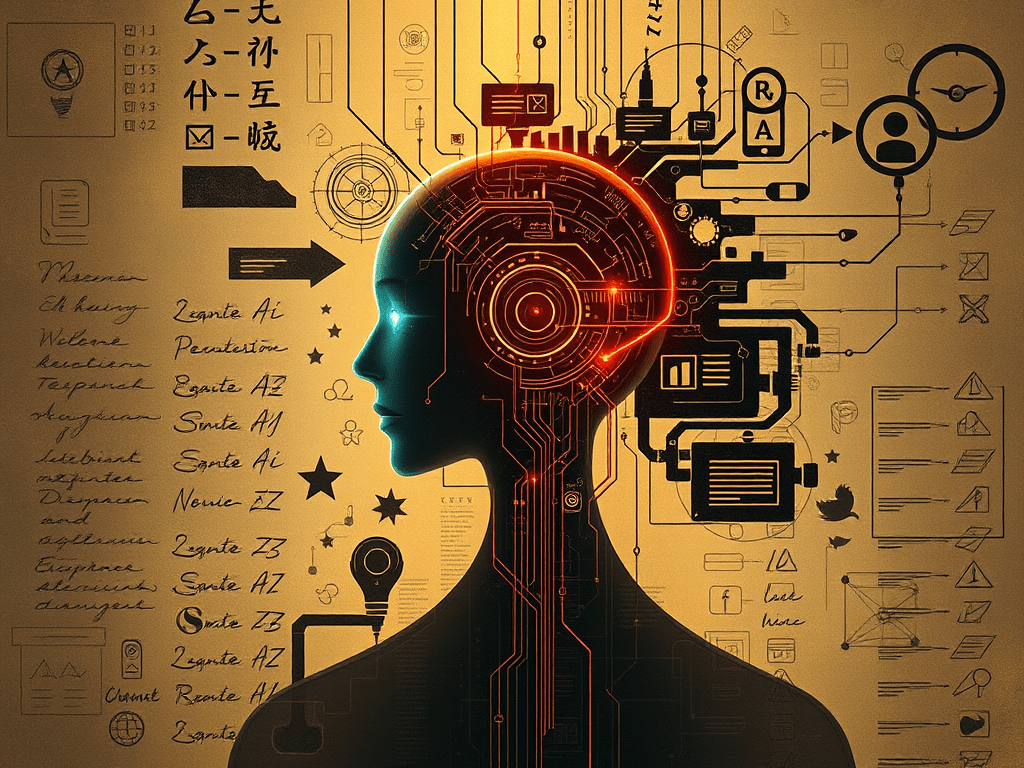
AI is not good or bad inherently – it is just here among us. What do we do?

Here I share some thoughts with you on AI in history, philosophy and the current digital landscape.

Why you?

You will have other thoughts, opinions and maybe concerns about AI. You will be feeling certain things about the new technology. If you’re worried about whether AI will replace people in the job marketplace, I have no answers here on that front, alas.

Why me?

I have a PhD in the history of reading, diary writing and the self; I have an MA in philosophy, with a particular interest in philosophy of mind and metaphysics; and I currently work in the digital world of user experience design and content. I am not an AI expert in any sense. I’ve just been piling up certain concepts in my head for a while and thought it would be fun to transmit them to you.

If you’ve read this far, you’ve already invested a few seconds of time in my thoughts, and hopefully you’re encouraged and interested enough to spend another couple of minutes with them.

AI in history

I don’t know much about the history of AI as a technology beyond the basics. I’m also very unfamiliar with AI in realms other than communications and the written word. I’m going to focus on that aspect of it mainly. I’m interested in the history of information and communications technology.

A brief history of information and communications technology

I’ve recently been reading the book Nexus: A brief history of information from the Stone Age to AI by Yuval Noah Harari. As a ‘big history’ fan, I enjoyed Harari’s exploration of information as a concept and as the central way to understand various political systems throughout time, ranging from democracy to totalitarianism. Not to pounce on the author’s tailcoat, but here is my own, slightly different version of that history, completely simplified and without the political systems angle.

At one stage long ago, humans took their own ideas, thoughts and feelings (‘human stuff’) out of their heads and transferred these onto physical objects. This could have been through drawings, symbols and/or what we understand as words. It could have also been various forms of what we understand to be art. The basic stage of this information and communication transfer is just about thoughts/feelings/ideas from our heads coming out onto some physical object in some form. That’s a broad definition, but it has bearing on my later theories of where we’re going with AI.

I’m focusing specifically on writing now. Writing I’ll just define as language being transferred, initially by hand, from our heads onto some physical substance in a way that another person can understand. Not everyone was doing this from the beginning. Over time more people did it. I would say this was the first information technology.

As we see now with recent information technologies, there was concern and fear when writing became more widespread. Plato, for example, feared that the proliferation of writing would make us stupid (I’m paraphrasing), because we would no longer remember things in our heads and share ideas through oral discussion. Think of the calculator making us not need to do ‘mental maths’ anymore. Like AI today, writing was once feared for dumbing us down.

For hundreds of years, people were writing, by hand, in different ways, on different materials, and sharing all this across distances.

Next: the invention of printing in various parts of the world at different times. This new technology allowed humans to create many more copies of the stuff being transferred out of their heads onto some physical substance and share it even more easily across distance. Books came about along with a plethora of other printed materials.

Later, people started being able to record more than just writing on physical matter. They could also record sounds and images and transmit them far and wide. Other information and communication technologies manifested in the telegraph, photograph, telephone, radio, television, video and so forth.

Now we come to computers. Computers are in a different category from the rest of these technologies because they were not just about taking stuff from our heads and putting them onto some physical format; they were manipulating the stuff in some way and then transmitting that out into the world.

(Sidenote: computers are also not as modern an invention as we may think. Scientists and philosophers have been theorising and working on them for hundreds of years at least, for example see Ada Lovelace).

In the current age, in the year 2025, computers are used throughout most parts of the world in a range of forms, for a range of purposes. From these, we have had the inevitable development of AI.

Not being very up to speed on the history of AI itself, my basic understanding follows. We started with computers being able to make decisions using a binary code: if computer receives 1, it does x; if computer receives 0, it does y. From there the technology expanded to do more complicated equations, based on more complicated rules, which led to algorithms. The relatively recent breakthrough has been giving the computer loads of examples, loads of inputs, so that it learns from them and acts accordingly. This could be a very basic definition of intelligence. Something comes into our heads or a computer, whether one input or many examples, some decision or choice is actively made to react somehow, and something different goes out into the world.

‘Non-human agents’

So be it. What I find the most fascinating part of this is that from the initial human starting point of stuff being transferred from our heads onto a physical form, now we have this intermediary that takes the stuff transmitted from our heads, makes something entirely new and sends it out into the world, according to an autonomous rendering of its own.

I see computers as intermediaries. Harari sees them as ‘non-human agents’. This is interesting – the concept of ‘agent’. What does an agent do, how much autonomy does it have, and how different is it to a ‘human agent’? I guess these are the big questions with AI. How will this agency, this autonomy, impact the world?  

I’m not going to explore consciousness

Who or what is conscious is a massive topic and a big debate. I’m not going to go there here. My focus is more on this flow between our human heads/hearts (selves) out into the physical world. AI, at least from my awareness of Large Language Models (LLMs), participates in a similar flow.

Perhaps the key question, therefore, is one of substance, or material, or physical matter. I loved reading philosopher David Chalmers book called Reality + in which he discusses virtual worlds. In the future there may be virtual worlds that operate in place of or alongside our own world, and in some ways, these already exist. Is this good or bad? Again, I’m not interested in the value judgement of these, rather that they could be in existence and perhaps just are.

He does discuss consciousness, but also the idea of physical matter; for example, our bodies, and how they may relate to a ‘virtual world’. In the question of AI and agency, this seems a fundamental angle. Who controls substance (what I define to be physical matter)? The classic dystopian fear of physical robots taking over the planet and destroying humans has been well rehearsed.

(Sidenote: I think this dystopian framing says so much about humans – the fact that if there were other agents with power above or beyond our own, they would automatically choose to dominate us. Why do we not assume they would be cooperative or benign?)

As I’m focused on the non-virtual world, as that is where human life begins and ends for now in the commonplace understanding of human life, who controls substance is primary. I believe, for now, humans still control substance. There is a point here about humans being controlled by non-human agents and therefore humans being manipulated to control substance in a way that is not autonomous. And maybe that is where the problem would come from.

A favourite novel of mine is Frankenstein by Mary Shelley. It touches on so many themes, but notably on the intelligence and substance question. ‘Life’ was given to a human substance (parts of dead human bodies) and then it acted autonomously. But it was still a substance like our own bodies and therefore limited in its capacity by that physical format.

So, we return to the beginning

My overall thinking is about human ideas, thoughts and feelings going out in the world in some way and how this works in computers and therefore AI. The key question is the agency, or what I prefer to call autonomy, and how this will impact the physical world. I’m not concerned that ChatGPT will manifest physicality (with the caveat again that AI is much more than just LLMs, and other forms of AI may do this).  

What seems to be more worrying now, in the digital communications realm, is not that algorithms are choosing to destroy us or making decisions on their own, but that we’ve set up competitive market forces that have influenced how algorithms work, tapping into some of the basest human qualities to survive. Specifically, I’m speaking of digital communications like social media, which have a huge ability to impact our thoughts, feelings and actions very directly and intimately, even more so than ‘traditional’ media forms.

In a massive a twist to the story, as so many of us carry around little computers, via our phones that we are tied to throughout the day in so many ways, it’s like that early development of us transmitting thoughts, ideas and feelings from our heads out into the physical world through writing, is now operating in reverse. We have this little side agent/’brain’ feeding stuff directly back into our heads during all waking hours.

It all comes down to this

It all comes down to the flow of thoughts, ideas, feelings, ie ‘human stuff’ (still not wanting to get into consciousness) within the world of physical substance. How will it play out? Who knows. It’s not simply ‘good or bad’. It’s all just fascinating.
Why I wrote Outside In

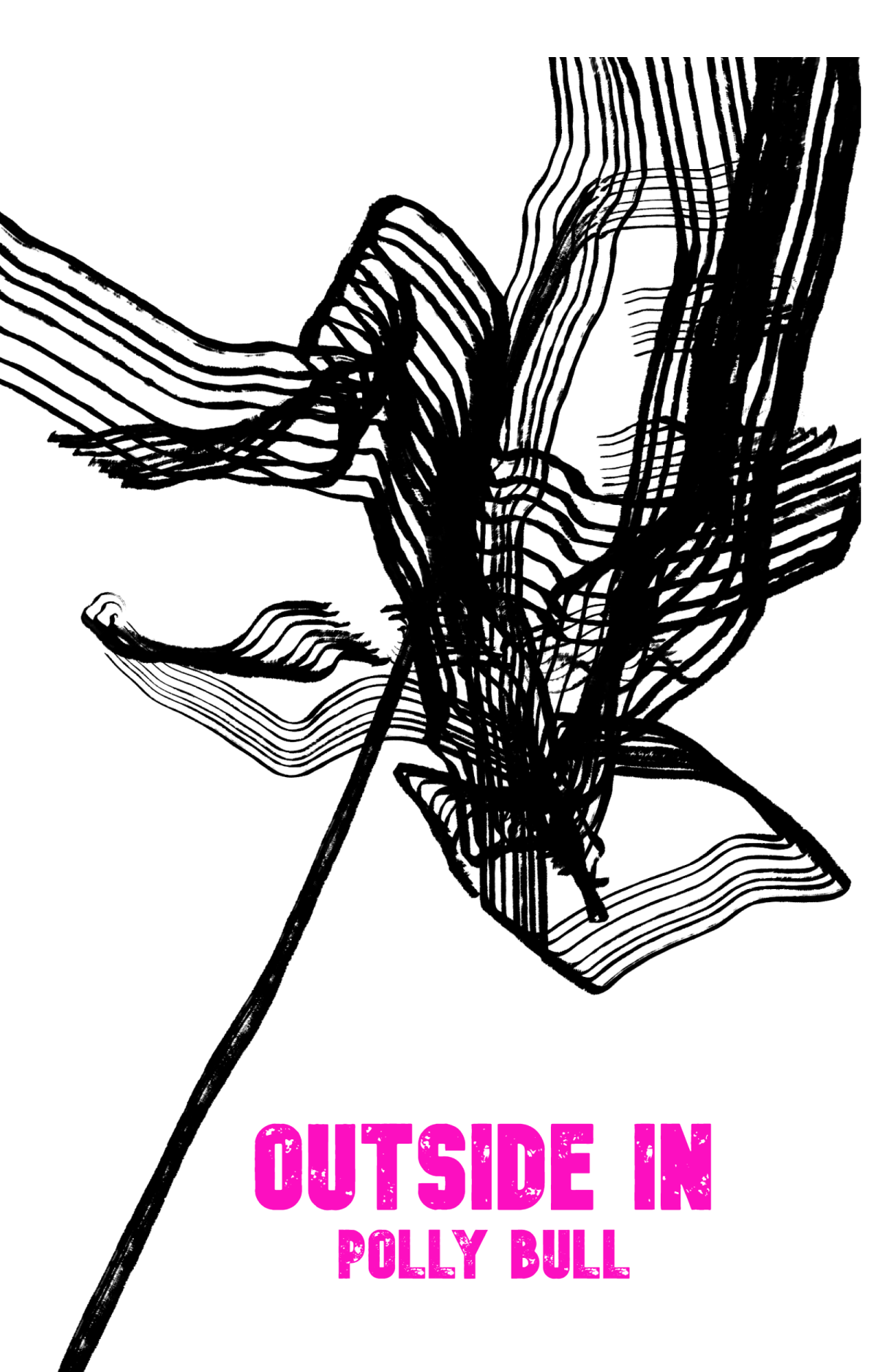
Four years ago I started writing poetry regularly. I’d write a poem a day to keep my head sharp and creative following a period of mental distress. The poetry was more than therapeutic, however. The writing was a process of reimagining myself following a personal crisis that I experienced as a catalyst moment. It was a time in which everything changed and I had to rediscover who I was. The publication of my poetry collection, Outside In, is the culmination of that process.

The poems explore my childhood, my identity, loss and growth. By funnelling feelings and memories into self-contained chunks of writing, I was able to add perspective to my experiences and see a larger picture. Within this context it was possible to shed unhelpful conceptions of who I was and empower a vision of who I wanted to be. The poems in this collection provide snapshots of that journey.

Some poems deal with absurdity and take a comic turn. Finding hope and beauty in the ridiculous has always been a goal. No self-reflection would be complete without a laugh.

The title underlines the relationship between our internal and external worlds, whether that be our physical surroundings seen through a window or our emotions that are either shared or not shared with those near us. It also relates to feelings of being an outsider that are often universal. Finally, the title alludes to ideas of “coming out”, whether that be about mental health struggles, sexual identity or gender identity, and the value of living authentically.

I hope readers relate to the work, feel empowered in their own journeys toward self-actualisation and enjoy the ride.

Spoken word versus written word: how to find the sweet spot

In my last few years of poetic enterprise, I’ve noticed how important delivery is when sharing my poems aloud. I do a lot of this now. From open mics to speaking my words with friends and fellow creatives, I’m learning that how you say something is as important as what you say.

For spoken word artists, delivery is crucial. While for poets on the page, perhaps the textual shape and word choice of the poem matters more. Of course, most poets, from what I’ve seen, are doing some variation of both and we definitely don’t want to squeeze ourselves into one or the other, though I guess some people might.

Speaking out

I’m so inspired by artists like Kae Tempest. Their delivery gives every word impact, providing meaning beyond just the words. The tone, rhythm, inflection, facial expression: it’s a real performance on a level with singing or acting. It’s not surprising that Kae is also such a talented rapper and live performer.

The “canon”

There are the dead poets of course whose work we can now only access on the page (barring any recorded readings), and the poets of the literary canon, many of whom are obviously brilliant. However, “canonising” literature raises it to a level of inaccessibility and unhelpful hierarchical superiority within some ivory towers.

The most ancient of poets of course did not write down their words. The power of their work was that it was shared and passed down orally from one generation to the next. For them, there was only spoken word. All you needed were ears to listen, making the art form truly democratic.

End goals

Naturally, binaries should be thrown out the window and most poets are doing spoken word, words on the page and all the variations in between. I’m still learning (as always), trying to figure out where I fit. But “fitting” probably matters little as long as the whole thing is fulfilling. Plus, creativity should probably be the antithesis of fitting into a particular mould.

At the moment, I’m enjoying practicing speaking my poems and discovering how a pause here or an emphasis there can change a meaning entirely. At the same time, I love the writing down, the shaping and crafting of words on a page, particularly hand-written words. There is so much flexibility and flow with a pen and paper.

So the goal is to simply to do more and more. Write more, read more aloud: experiment, experiment, experiment. There’s no sweet spot really. It’s all for the love of words and language, however that expression manifests.

The poetry sails on

Obviously the world is a very different place since my last post in January. I am very thankful for my loved ones, my health and my material situation. I have been able to keep working on poetry during this lockdown period, refining past work, performing new work virtually at Celine’s Salon and featuring on Soho Radio.

The City Lit course, “Ways into Poetry”, taught by Joanna Ingham was brilliant. I learnt new poetic forms as well as exercises to improve creativity. My fellow students were talented and dedicated. During the course I also went to my first poetry fair, met some more established poets over a pint and bought loads of pamphlets.

My current goal for my poetry is further publication and eventually a pamphlet. I have been through about 80 word-processed poems that I have written in the last year (which don’t include hundreds handwritten in notebooks over the past three years), and narrowed down a shortlist of 12 that I plan to redraft ready for publication.

As always I am very grateful to author Lucy Tertia George for her support, guidance and feedback on the poems. I am also enjoying making my way into the London poetry community, particularly getting to know poets at Celine’s Salon in Soho, Speakeasy in Fitzrovia, and the “Cheerfuls”.

There are a couple of deadlines coming up in May for publications that I am focused on and there will be more to follow. In the meantime, the poetry voyage is still very exciting and vital, and I’m lucky to have wind in my sails.

2020: new decade, new opportunities, new courage

The new decade has started well in the land of creative writing. I’m still focusing on poetry as per the goals discussed in my previous post. In that post I also mentioned a published poem which I failed to link to: Lost smugglers.  Thank you to Bridget Holding and Wild Words for the opportunity and support.

My poetry course began last week at CityLit and I can tell it’s going to be great. The tutor is the wonderful Joanna Ingham who has recently published a pamphlet called Naming Bones (ignitionpress, 2019). She got us straight into memory, emotions and anaphora in the first class, which was fascinating and useful. And she’s assigned optional homework that I am absolutely going to do because I love homework.

Another new endeavour recently has been the organising of a new meetup group: Queer Poets. I am very excited about our first get-together this upcoming Friday evening at the Rose and Crown pub in Kentish Town. People are welcome to share poetry, join in a constructive feedback session and then enjoy a social together. I’m very much looking forward to meeting everyone and being in a creative environment with fellow poets.

I have also recently moved into a different flat which has so much natural light my vitamin D levels are probably through the roof, despite the often grey sky. The space is so beautiful and has really been conducive to reflection and poetry rewriting.

All of these new beginnings have boosted my confidence and courage, and I am pleased to be starting the new year on a positive note.


Poetic inspiration and creative focus

Since my last entry, my creative writing process has been reenergised, refocused and awash in inspiration. Happily I had one of my poems read by an amazing poet on BBC radio. That same poem also won runner up in a competition.

I have made a decision to only focus on poetry at this time which definitely means I spend more time rewriting and editing, instead of constantly coming up with new, undeveloped ideas in my notebook that never go anywhere.

I currently have just over 50 poems in various drafting stages. In January I will begin a poetry course at City Lit. The talented members of the poetry group of which I am a member are flourishing. And I have continued performing, reciting and learning about presenting poetry in public. My goal for 2020 is to publish a collection of poems.

I find writing poetry so important and so satisfying. It’s not just about the initial inspiration, but also the restructuring, the reordering and the finessing. I have not had this much fun with writing since my time in academia writing about history.

Recently I have begun a new phase of poetry writing that is not about grief. This is very refreshing and, again, I am learning what works and what doesn’t. I am also exploring humour. I am enjoying writing discrete episodic poems, in which one small activity or incident is dwelled upon and dissected to the core. Hopefully this brings greater meaning to the mundane.

I am also extremely lucky to share ideas and feedback with an extraordinary writing partner who is fundamental to this process.

So, since my last post things are looking up creatively. And I am very pleased.

Tomorrow I am performing a new poem at Celine’s Salon in Gerry’s Club, Soho, London, 7.30pm.  See you there.

Finding your voice

Identifying your ‘voice’ in creative writing is no easy feat. But it is vital, at least within one cohesive piece of writing. The spoken word can enable a writer’s voice. Here, I’d like to explore how our writerly voices and verbal voices relate.

I’ve been thinking about voice in a literal, physiological sense. I’ve never liked my speaking voice, until recently. I’ve had some good feedback from people so I’m going to drop the self-critical impulse in this regard. Anyway, it is what it is. My voice represents my personal story.

I also find this topic interesting in the wider sense of communication: how do you know what to say? It wasn’t just that I didn’t used to like my voice, I found conversation difficult at times. So much to say potentially, but not knowing what to focus on for each particular interaction. I would be sporadically verbose, and reticent the rest of the time.

But that’s also the self-consciousness of younger years, maybe. I found speech hard, but writing much easier. So I did a lot of personal writing to connect with people. It was easier to formulate the arguments and ideas through writing, than it would be in a verbal conversation.

Still, the happy news now is that I am learning, through recitations, performances and conversations, the power of the spoken voice which has also made me consider the purpose of voice in creative writing.

What does it mean exactly? I found this useful piece from Medium that explains it well:

The writer’s voice: what is it and how to find yours

In a nutshell, voice makes your work you. It’s your personality, your experiences, and it is unique. I’m still working on this in writing, and I guess we all are, always. But I have found that strengthening my spoken voice and putting it on a stage has been very empowering.

Speaking publicly forces you to be the centre of attention. So your uniqueness becomes more immediate and more raw. It is not buried in paragraphs. You can’t hide yourself in an essay.

I do think the writer’s voice and the speaker’s voice can inform one another. For me, the plan is to become more confident in conversation and public speaking, so I can also write with a stronger sense of authenticity.


The importance of deadlines

Writing as often as possible is a goal. However, I do not achieve this as much as I would like. Sometimes I’m tired. Sometimes I’ve been socialising a lot. Sometimes I’m exhausted from content designing. Sometimes I’m reading.

But deadlines constitute concrete goals that I can structure my time around. At the moment my two forms of deadlines are:

  1. Performances
  2. Competitions

I have so far only performed at one venue (once a month, so four times this year). Each of these occasions demanded plenty of prep work: rewriting, editing, rehearsing and meetings with my writing partner. In May and June I have a few other nights, at different venues, where I will be performing as well. So more prep work to do and concrete deadlines to work towards.

I have also started entering competitions. This takes time and dedication again, particularly as there are so many (though I am choosey, especially when time poor). Unfortunately I missed all the deadlines on 30 April and 1 May due to the reasons aforementioned (tired, socialising, content designing or reading). Still, competition entry is another new discipline, like performing, in 2019 that is lending impetus to my writing habits.

Deadlines are essential for me. I can be quite driven generally, but I still need those extra incentives to focus my writing practice. And both forms of incentives involve sharing work with new audiences, which is absolutely critical to the whole process.

When do you call yourself a writer?

When do we own a label such as “writer”? How much writing do we have to do to achieve this badge?

Identity shifts throughout our lives. Some people identify with the work they do, and some have other primary identifiers. After several years of practicing meditation and noting how much things change from moment to moment, I now find identity tricky. Still, the concept is powerful.

There is a massive discussion point here about identity politics and “where we are now” in the turbulent day to day. The topic is a salient one.

When you first meet a new person, “what do you do?” might be an early question. This is a complicated conversation universally, I think. What’s our default answer? For me, it has tended to be about what I do to earn a living: my day job. But we could all say so much more than that.

Focusing on the “day job” side of identity here, I think lots of categories/binaries are breaking down when it comes to work. People’s DIY careers are telling because they often merge many forms of activity: career, work, free time, passion and vocation, among others. It’s not simply professional versus personal.

So, when do we call ourselves writers? Each to their own, I think. Who we are is there for us to imagine and then create (only if we have that privilege: a fundamental qualifier).

I don’t have a straight-forward answer to the question, other than an “I think, therefore I am” approach. I’ve written loads now, so I would definitely call myself a writer. Authorship is a debate for a different entry, but I believe even that identity (like all identities) could be shape-shifting.


When is the right time for write time?

Over the years I’ve read about many different routines of great writers and discovered that almost all are strict and followed religiously. Usually the prolific writers start quite early in the morning.

Waking up early is a new thing for me over the past couple of years. I love the quiet of the early morning and drinking coffee in bed, even on weekdays. By the time I leave for my walk to the office, I’ve been up for at least two hours.

However, it is only recently that I have started writing in the early morning. Before this, I still had it in my head that I was not a morning person, so, even if I was awake, creativity wouldn’t work.

Actually, writing in the early morning is very productive, for me at least. The creativity does work. So far I’ve only written in the early morning at the weekend, but I’m considering instigating it on weekdays as well, especially as I feel quite tired in the evenings and go to bed relatively early, if I’m having an evening in.

I am currently feeling very passionate about poetry in the morning. I have recently done another recitation at the same literary night as before. I felt much more solid this time. Still a long way to go, but hopefully that is always the case, the growing and changing.

I have also returned to my short story compilation, to get myself back in the prose head space. For me, with this and other story projects, along with poetry, early morning writing seems to be the way forward for skillful outputs.

Second poetry performance

Second poetry performance. Photo credit: Lucy Tertia George.

From medium.com:

The Daily Routine of 20 Famous Writers