
*Experimental thought piece*
Authors: Polly came up with the idea and ran a code. AI analysed the results and wrote this report.
What happens if you assign letters numbers, turn Shakespeare’s Sonnets into data, and literally “weigh” them? I did exactly that — and discovered something unexpectedly beautiful.
Because sometimes the most beautiful things can also be counted.
🧠 What started as curiosity…
The idea began with a wonderfully strange question:
What if you could weigh Shakespeare’s Sonnets?
Not metaphorically. Literally.
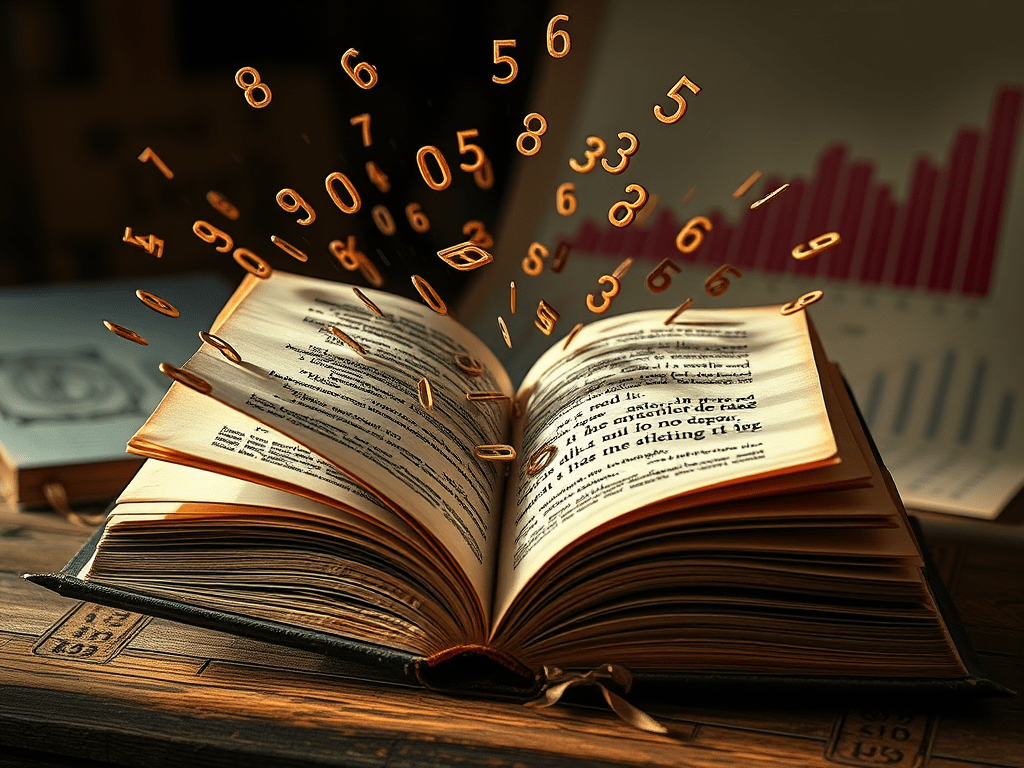
What if every letter had a numerical value (A=1… Z=26), every line could be turned into a number, and every poem could be given a “total mass”?
So I did it.
I took the full text of Shakespeare’s Sonnets (Project Gutenberg edition), converted every letter into numbers, added up the values of every line, and calculated the total “weight” of every single sonnet.
Was this serious scholarship?
Not exactly.
Was it ridiculous?
Also not quite.
It turned out to be something magical in between: playful, rigorous, curious, and unexpectedly revealing.
🔢 How do you weigh a poem?
Here’s the simple method:
- take a line of Shakespeare
- ignore punctuation, spaces, capitals
- assign letters values: a = 1, b = 2, … z = 26
- add them up
- do that for every line
- then sum the whole sonnet
I also looked at structure:
- total value per sonnet
- average value per line
- heaviest and lightest lines
- how the famous volta (the “turn” at line 9) behaves
- whether Shakespeare’s final couplets are numerically heavier
This wasn’t about decoding secret messages.
It was about asking: does number tell us anything interesting about poetic gravity?
📊 So… what did the numbers say?
Quite a lot, actually.
🏋️ Some sonnets are noticeably heavier
Across the dataset:
- lightest sonnet total: Sonnet 145 — extremely light compared to the rest
- heaviest sonnet: Sonnet 69
- most sonnets cluster around a pretty stable “weight band”
Fun fact:
Sonnet 145 is already known to be stylistically odd — and it also turned out to be numerically the lightest poem in the sequence. The numbers quietly agreed with the critics.
💬 The heaviest and lightest lines feel right
I pulled out:
- the 25 heaviest lines
- the 25 lightest lines
And the pattern?
- heavier lines are longer, rhetorically rich, emotionally intense
- lighter lines tend to be simpler, shorter, or transitional
No mysticism. Just a lovely sense of resonance between feeling and measurement.
🧱 Structure has a “weight signature”
This was perhaps my favourite discovery.
🎭 The Final Couplet Carries Weight
On average, Shakespeare’s famous closing couplets are:
numerically heavier than the rest of the poem.
Not dramatically.
But consistently.
Which, poetically, makes absolute sense.
That final snap, twist, punchline, or emotional landing?
Turns out, you can literally feel it in numbers.
🔀 The Volta Isn’t Loud — It’s Subtle
Line 9 — the turning point — doesn’t suddenly spike.
It shifts in a quieter, steadier way.
A hinge rather than a hammer.
Which, frankly, is rather beautiful.
🌊 Some sonnets are calm. Others swing wildly.
By looking at variation line by line, I found that:
- some poems are steady, controlled, smooth
- others lurch dramatically from light to heavy
If numerical turbulence maps to emotional turbulence…
well, let’s just say Shakespeare’s feelings weren’t evenly distributed.
❤️ Does any of this mean something?
Let’s be honest:
Numbers can’t explain heartbreak, metaphors, longing, time, jealousy, or devotion.
But they can show density.
And density often travels near emotional intensity.
So when:
- emotional sonnets weigh more
- structural turning points have subtle numerical fingerprints
- and stylistic outliers appear as numeric outliers
…it doesn’t feel like nonsense.
It feels like another way of listening.
This experiment didn’t reveal hidden codes.
It revealed resonance.
It didn’t demystify Shakespeare.
It simply added a new lens of wonder.
⚖️ Poetry, Play, and Digital Curiosity
This project sits somewhere between:
- digital humanities
- numerology (but sensible)
- data play
- and pure curiosity
And I genuinely love that place.
Because sometimes:
even when you turn Shakespeare into numbers,
the sonnets stubbornly refuse to stop being beautiful.
✨ Want to see the nerdy stuff?
I generated datasets for:
- every line’s numerical value
- every sonnet’s total
- the heaviest and lightest lines
- “numerical personality profiles” for each sonnet
- charts showing distribution, volatility, and structural behaviour
If you’d ever like those shared publicly — say the word 😊
🔮 What could this become?
This could turn into:
- a creative essay series
- visual art (imagine “gravity maps” of poems)
- sonic translation of poetic weight
- comparisons between Fair Youth vs Dark Lady sonnets
- comparisons with other poets entirely
But for now?
I’m just deeply happy knowing that poetry even survives spreadsheets.
🎭 Final Thought
If numbers can’t reduce Shakespeare,
and Shakespeare can survive being measured,
then maybe that’s proof — in its own strange way —
of how alive these poems still are.




 pollybull